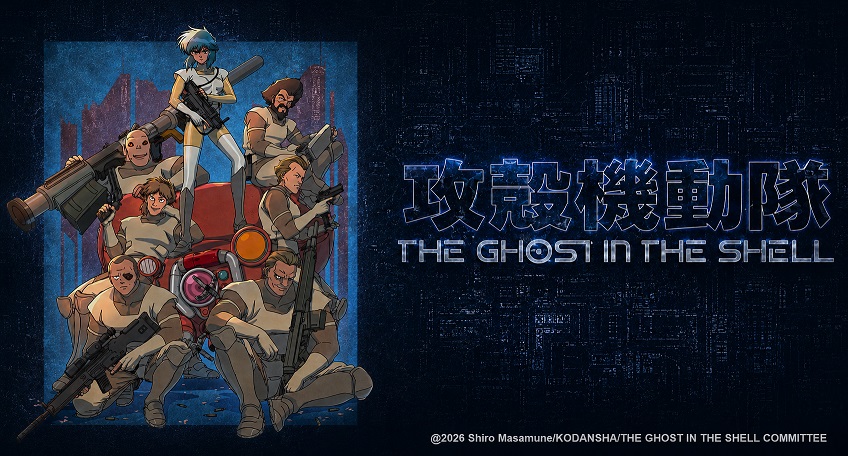
English Dub Review: The Ghost in the Shell “BYE BYE CLAY”
Overview
A robot flees from Megatech Body Co., Ltd. Section 9 takes it into custody, only to find that the Puppet Master is inside it. The Puppet Master announces to Aramaki’s team that it is “a life form that arose spontaneously in the sea of information.” Moments after it requests political asylum, it is stolen by an unknown party.
Our Take
Picking up from the previous episode, we finally enter an iconic story arc known as the “Puppet Master” storyline, arguably the material most deeply ingrained in the franchise’s identity. For many viewers, the original 1995 Anime film is what immediately comes to mind when they think of Ghost in the Shell, and a large part of that association comes from its adaptation of this particular storyline. Seeing the same material revisited here is therefore fascinating, especially since this version remains surprisingly faithful to its source while presenting certain events differently from the films. What begins as an investigation involving a mysterious prosthetic body gradually develops into a much more philosophical exploration of consciousness, identity, and the nature of existence.
That said, its faithfulness to the manga has some noticeable limitations. While the story and many of its ideas remain intact, the anime heavily censors the manga’s more explicit nudity. The contrast can be particularly jarring for anyone familiar with the source material, where the characters’ bodies are depicted much more openly; seeing even something as simple as nipples completely omitted here adapts feel noticeably sanitized in comparison. Still, the episode’s presentation more than makes up for some of that visually, with striking direction, atmospheric nighttime cityscapes, haunting music, and surreal imagery giving the Puppet Master material an almost dreamlike quality. The sequence involving Motoko and the Puppet Master is especially mesmerizing, turning its philosophical ideas into something that feels almost otherworldly.
Overall, this is an ambitious and fascinating reinterpretation of one of the most recognizable *Ghost in the Shell* storylines, and its connection to the material that helped define the franchise for many fans makes it especially rewarding to watch. The philosophical themes surrounding consciousness and existence can certainly be abstract, but the episode embraces that ambiguity through its visuals, music, and direction rather than simply spelling everything out. Even with the noticeable censorship compared to the manga, this remains one of the season’s most memorable episodes and a compelling reminder of why the Puppet Master storyline has endured across multiple Ghost in the Shell adaptations.