Review: Captain Zero: Into The Abyss: Part II
Overview
Framed through his therapy sessions, high school senior Xerxes Hughes struggles to juggle his double life as a student and superhero, all while trying to confront his inner demon… literally.
Our Take
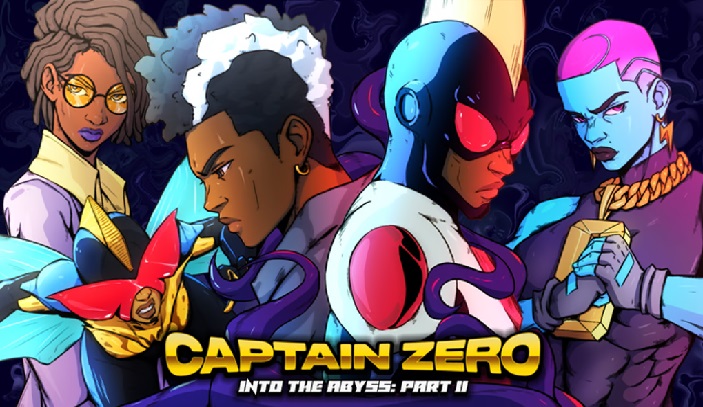
In a nutshell, Captain Zero: Into The Abyss Part II is a 14–15 minute animated short that I originally had a hard time tracking down, mostly because it turns out it’s not just floating around as a standalone piece, it’s actually an episode pulled from a streaming anthology series called Future of Film: Chicago XL. At its core, it follows Xerxes, a Black teen who lives a double life as the superhero Captain Zero, and the whole thing is framed through therapy sessions where he unpacks his experiences while literally going up against the “Depression Demon” (Keith David), a physical manifestation of his insecurity, self-doubt, and mental strain. It’s very much that setup where the internal world and superhero fiction are constantly bleeding into each other, and the therapy framing is doing a lot of the heavy lifting in how we understand him.
For a Kickstarter-funded project (and I mean that in a good way), the animation is honestly way above what you’d expect from something indie in this format. It’s got this vibrant, colorful, hyper-stylized energy that feels like 2010’s FOX ADHD-era chaos along the lines of shows like Axe Cop or Major Lazer but played completely straight, then filtered through something darker and more psychologically warped, akin to Satoshi Kon’s Paranoia Agent. The visual direction is sharp, expressive, and constantly in motion, which makes it feel a lot bigger than its runtime. Compared to Part 1 (which is only on YouTube), Part 2 feels like it’s trying to do a lot more in the same tight runtime, maybe a little too much. It’s slightly overpacked with story beats that don’t all get space to breathe in a 10–15 minute window, but at the same time, it does succeed in setting up ideas and plot-threads that make you want to understand how all these narrative dots connect. It’s very anime-inspired, character-driven, and very much about momentum over explanation.
Overall, this was a bold, emotionally charged animated short that uses a superhero framework to explore mental health in a direct, unfiltered way, carried by a strong voice cast featuring Z Cher-Aime alongside standout performances from Keith David and Angelica Ross; at its core, it examines how pressure, identity, and depression compound when no one fully sees what someone is going through, rendering it immediate and personal even as Part II feels slightly over-packed with ideas for its runtime. The quarter-hour short works best as an emotionally charged snapshot focused on mood and psychological texture rather than a fully resolved narrative, prioritizing feeling over closure. Whether or not we see more of this in the future remains to be seen, but it certainly wasn’t boring.