Inside ‘Long Story Short’: Raphael Bob-Waksberg and Cast Unpack Netflix’s Hit Animated Family Drama
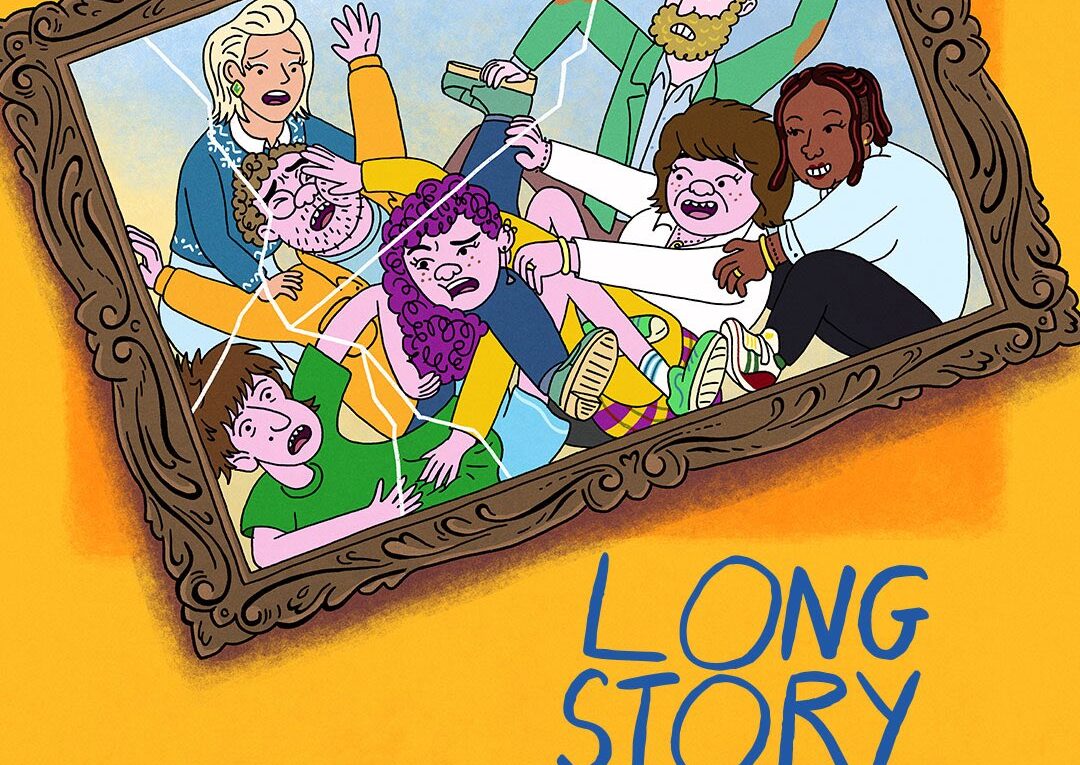
In the world of adult animation, family dysfunction is a well-worn sandbox. Yet, when Raphael Bob-Waksberg is holding the shovel, the castles built tend to look vastly different. Following the global acclaim of his breakout series BoJack Horseman, the showrunner returned to Netflix with Long Story Short, a poignant, bitingly funny examination of the Schwooper family that has already secured a Season 2 renewal.
To celebrate the show’s success, Netflix released an exclusive “Inside the Series” behind-the-scenes featurette.
The deep dive gathers Bob-Waksberg alongside core cast members Ben Feldman, Nicole Byer, Max Greenfield, Angelique Cabral, and Lisa Edelstein to deconstruct the show’s emotional complexity, structural gymnastics, and the universal messiness of memory.
Bending Time to Capture Reality
At the heart of the featurette’s discussion is the show’s signature storytelling device: its radical, non-linear chronological jumps. Rather than progressing down a straight narrative path, Long Story Short shuffles the lives of three Jewish-American siblings—Avi (Feldman), Shira (Abbi Jacobson), and Yoshi (Greenfield)—from childhood to adulthood and back again, often within the span of a single episode.
In the featurette, the cast reflects on how this fluid approach to time accurately mimics the human brain. Bob-Waksberg and the actors explain that the show’s writing uses time jumps to capture how memory works in real life. We rarely look at our present experiences in a vacuum; our current joys, divorces, and compromises are constantly being recontextualized by the echoes of our upbringing.
Dissecting the WGA-Winning “Shira Can’t Cook”
A significant portion of the exclusive featurette shines a spotlight on one of the first season’s crowning creative achievements: the Writers Guild of America (WGA) Award-winning episode, “Shira Can’t Cook.”
The creative team uses this specific episode to highlight how the series grounds its absurdity in genuine stakes. The cast dives deep into the Schwooper family’s multi-layered struggles with inheritance, cultural traditions, and the heavy weight of communal grief. By analyzing the episode, the actors note that what makes the family so deeply relatable isn’t that they have everything figured out, but that their friction feels incredibly authentic to anyone who has ever loved—or been deeply frustrated by—their own relatives.
“Family… you gotta love ’em,” the featurette reminds us, encapsulating the central thesis of a show that refuses to paint relationships in simple black-and-white strokes.
The Powerhouse Animation Pipeline
Beyond the voice booth, the featurette pulls back the curtain on the show’s distinct, highly expressive visual style. Long Story Short brings together a powerhouse roster of independent animation veterans to execute its narrative vision.
With Season 2 officially locked and loaded at Netflix, Long Story Short continues to prove that animated sitcoms don’t need a laugh track to capture the humor of the human condition. By prioritizing small, quiet character studies over flashy, consequence-free gags, Bob-Waksberg and his team have crafted a mirror that reflects the small triumphs and devastating follies of everyday life.