English Dub Season Review: Agents of the Four Seasons: Dance of Spring Season One
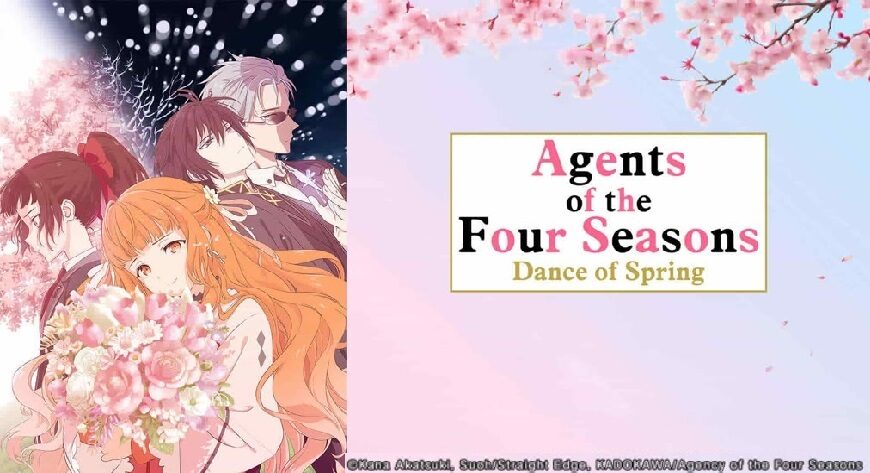
Based on the Japanese light novel series written by Kana Akatsuki (the author of Violet Evergarden) and illustrated by Suoh, this story takes place in a world where the natural balance has been destroyed, leaving the land trapped in an endless winter after the seasons fell into disarray ten years earlier. For centuries, the cycle of spring, summer, autumn, and winter was maintained by the Four Seasons, deities who eventually entrusted their powers to chosen human avatars known as the Agents of the Four Seasons, granting them elemental god-like abilities to preserve peace and stability across the world. However, these powers became the target of those seeking to exploit them, leading to an attack orchestrated by the Rebels. To protect the others, the Agent of Spring, Hinagiku Kayo, sacrifices herself and allows herself to be captured, vanishing without a trace. Refusing to believe she is gone, her loyal guard, Sakura Himedaka, spends years searching for her despite being abandoned by those around her. When Hinagiku is finally found a decade later, the trauma she endured has changed her, but with Sakura’s unwavering support, she finds the strength to reclaim her role and restore the missing spring. Together, they set out to revive the lost season, uncover the truth behind their painful past, and confront the enemies determined to plunge the world further into despair.
On the Technical side, this anime adaptation of the first part was produced by Wit Studio and directed by Ken Yamamoto, with Kazuhiro Furuhashi serving as animation adviser, Ayumu Hisao handling series composition, Namiko Torii designing the characters, and Kensuke Ushio composing the music. The opening theme song is “Petals”, while the ending theme song is “Hana Ikada”, both performed by Orangestar featuring Kase.
Agents of the Four Seasons is a series that feels like it had the potential to be something truly special, especially with such a visually appealing adaptation behind it. At its best, the story delivers powerful emotional moments while exploring themes of love, grief, healing, and moving forward after trauma. The bond between Sakura and Hinagiku is easily one of the show’s strongest elements, as their connection goes beyond a simple romantic interpretation and focuses on understanding, devotion, and the lasting impact people can have on each other. However, the series’ constant reliance on tragedy and emotional extremes sometimes causes those moments to lose their impact.
Throughout the season, the biggest strengths of the show come from the way it portrays the relationships between its characters. Sakura and Hinagiku’s bond stands out because it is not just about romance but about the trauma bonding and healing they provide each other. The series also does well in showing different perspectives and struggles, giving characters like Rousei and Itecho meaningful dynamics that add depth to the story. While some characters could have used more development, the emotional foundation of the cast remains one of the anime’s greatest strengths.
The larger conflict, however, is where the story begins to struggle. The terrorist organization and its motivations to pursue the “Season” avatars often feel underdeveloped compared to the personal stories of the characters, while the lack of world-building leaves many questions unanswered. The seasonal agents are portrayed as incredibly important figures, yet their security and the response to the threats against them feel strangely limited. The repeated flashbacks, tragedies, and emotional breakdowns also begin to lose their effectiveness over time, making some scenes feel more like emotional overload rather than meaningful progression.
The animation and music are easily among the strongest aspects of the adaptation. The visuals beautifully capture the emotional atmosphere of the story, while the voice acting gives many of the heavier scenes additional impact. The soundtrack also complements the dramatic tone well, with the opening and ending themes standing out as memorable highlights. However, the direction can occasionally feel overly focused on forcing emotional reactions through dramatic music and exaggerated performances, which sometimes makes certain moments feel more melodramatic than genuinely moving.
Overall, Agents of the Four Seasons is a flawed but memorable series that succeeds most when focusing on its characters and their emotional connections. The finale brings many of the season’s themes together and provides a satisfying conclusion to the relationships that had been built throughout the story. While the uneven pacing, excessive melodrama, underdeveloped antagonist plot, and unanswered world-building questions hold it back from reaching its full potential, the series still delivers meaningful moments about trauma, healing, and human connection. As of writing this, there is currently no word on whether another season will happen, but the story leaves enough room for future exploration of other agents and their relationships if it ever continues.