English Dub Season Review: Fist of the North Star Season One
Based on the beloved ultraviolent manga by Buronson and Tetsuo Hara, Fist of the North Star unfolds in the dystopian world of 199X, where nuclear war has reduced civilization to a brutal wasteland. With oceans dried up and society collapsed, the remnants of humanity are divided between those who dominate through violence and those left to suffer under it. In this lawless era, where survival hinges on strength alone, a lone wanderer emerges from the ashes, Kenshiro, the rightful successor of Hokuto Shinken, marked by seven scars on his chest in the shape of the Big Dipper. As he walks the scorched earth, bringing justice with his overwhelming power, his journey begins as both a fighter for survival and a potential savior in a world that has all but lost hope.
On the technical side, this anime adaptation was produced by TMS Entertainment, with additional animation support provided by NIA Animation and Kishida Studio BACU, while Amazon Prime Video has licensed the series internationally, and the English dub is being produced by TransPerfect Media. Directed by Hiroshi Maeda (director of photography for Hellsing Ultimate, Aquarion), with series composition by Kazuhiko Inukai (Girlfriend, Girlfriend), character designs by Naoki Hisatsune, co-direction by Kazuma Ogasawara, animation direction by Koji, and a musical score composed by Yuki Hayashi of My Hero Academia fame. The opening theme, “Hallelujah,” is performed by [Alexandros], while the ending theme is a new rendition of the classic “Ai wo Torimodose!!” performed by Toshi.
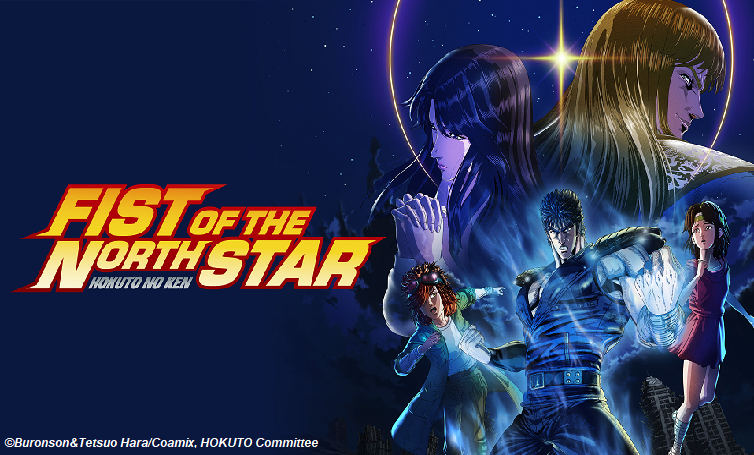
Fist of the North Star 2026 is a modern CGI reimagining of the legendary manga that helped define the foundations of the battle shonen genre, with its influence still deeply embedded across decades of media. Its DNA can be seen in other iconic works such as the early stories & character designs of JoJo’s Bizarre Adventure, while its post-apocalyptic aesthetic and character designs have also shaped video game franchises like Double Dragon. Outside the anime itself, the franchise has recently seen renewed visibility with Kenshiro being added as a DLC character in the video game Fatal Fury: City of the Wolves, reinforcing the character’s continued cultural relevance.
The 3DCG presentation stands as one of the most defining aspects of the adaptation. Early episodes can appear somewhat stiff in both movement and facial expression, but the direction steadily improves over time, with the action sequences becoming clearer, more dynamic, and more impactful as the season progresses. Despite its divisive reputation in general discussion around CGI anime, the visual approach remains consistent with the series’ intended identity and overall presentation.
The narrative remains faithful to the structure of the original manga, unfolding through episodic confrontations in a devastated world where strength dictates survival. The primary focus is on establishing Kenshiro’s journey and the harsh environments he travels through, with each encounter reinforcing his role as both a force of justice and a wandering executioner. While the storyline is straightforward by design, its repetitive structure strengthens the core themes of despair, vengeance, and resilience that define the series.
In terms of sounds & visuals, it’s supported by a soundtrack composed by Yuki Hayashi, best known for his work on My Hero Academia, with the score effectively complementing the series’ atmosphere even if it is not as instantly iconic as the original 1984 soundtrack. The updated rendition of “Ai wo Torimodose!!” in the end credits acts as a strong tribute to the franchise’s legacy, while the visual direction makes deliberate use of dramatic lighting, especially rim lighting and high contrast, to emphasize the bleakness of its world. Upon research into the production, the show’s director, Hiroshi Maeda, was fully aware of the backlash surrounding the 3DCG approach, yet chose to proceed with it as a conscious creative decision aimed at translating the manga’s visual identity through modern tools. While I can understand why the approach remains divisive, it never personally detracted from my enjoyment of the series.
Overall, Fist of the North Star 2026 stands as a faithful but uneven modernization of a landmark series, succeeding more in preserving its spirit and identity than in achieving consistent technical refinement. While the CGI approach remains a defining creative choice throughout, it still conveys the brutality and emotional weight of Kenshiro’s journey effectively. With a second season already announced for 2027, the adaptation has an opportunity to build upon its strengths and further refine its presentation as it moves into the manga’s more ambitious story arcs going forward, and I hope to see it when it happens!