English Dub Review: Mononoke the Movie: The Curse of the Serpent
OVERVIEW:
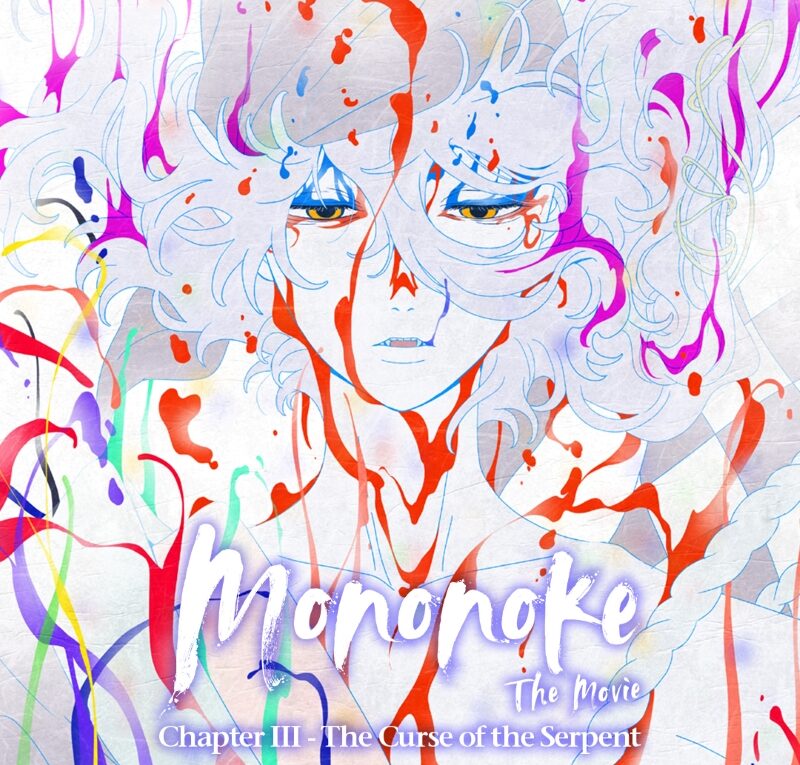
The final chapter of the Mononoke trilogy continues to dig deep into the Ōoku’s dark mysteries and secrets. With the birth of a successor, the Medicine Seller unravels the mystery of Hebigami, the oldest and most dangerous mononoke the Emperor’s harem has produced.
OUR TAKE:
As somebody whose first experience with the Mononoke series was the films, director Kenji Nakamura did very well. The trilogy managed to deliver a story that did not require me to watch the original series, but inspired me to pick it up. Watching all these films is definitely worth the time, even if it doesn’t feel as connected as most series.
Each film works best as a standalone story, but works to help appreciate the setting and characters better. Ironically, Curse of the Serpent’s weakest link is how it tied the trilogy together. While the other mononokes’ motives tie to the Ōoku’s corruption, framing it as though they were targeting the shrine all along feels wrong. It robs the compelling nature of each individual story by trying to put a mastermind at the center of it all. Rather, Hebigami feels more like it’s taking advantage and striking when the palace’s divine protection is weakest.
Still, seeing the last two films helps fully understand each ensemble cast member. The previous characters from the Ōoku and their growth with time’s passage were all nice to see, and the true final boss ties into the trilogy well despite lacking an actual fight. They also subtly set up a pattern of investigating the mononoke’s “Form,” “Truth,” and “Reason” before its eventual defeat, which this final installment breaks with more danger, more victims, and even one more mononoke.
Everything the previous films did well, from an addicting soundtrack to colorful art impossible to look away from, the finale continues. Crispin Freeman gives his best performance as the Medicine Seller, who genuinely seems to struggle far more with this fight than with the other mononokes. Returning screenplay writer of The Ashes of Rage, Yasumi Atarashi, also shines through with a plot of succession and parenthood. This time, however, it leans more towards the political than personal.
Last but certainly not least to discuss is Hyakume, who works better as a final boss as the manifestation of all emotion stemming from the Ōoku. As previously mentioned, the encounter isn’t really much of a fight than an exploration of each character, but the action of the Hebigami fight more than makes up for it. Even without the original series beforehand, seeing the original Medicine Seller and the Sword of Ri was no less exciting. In fact, it encouraged me to see it even more.
Whether you plan on binging the entire trilogy or have already watched the previous films beforehand, Curse of the Serpent is a good conclusion to a film series all viewers of ghost stories, Japanese history and folklore will not be disappointed by.