English Dub Season Review: Clevatess Season One
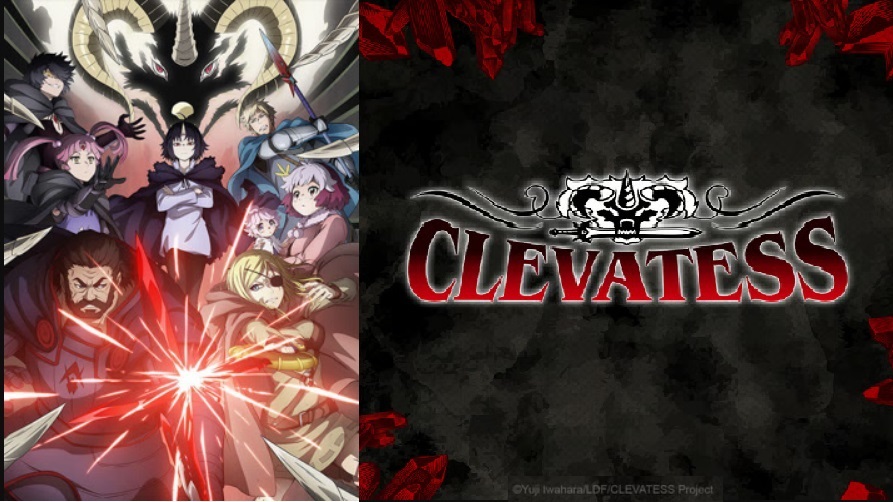
Based on the Japanese manga series by Yūji Iwahara, Clevatess follows one of the Four Beast Kings after he annihilates thirteen heroes and destroys the Kingdom of Hiden in retaliation for invading his territory. However, instead of finishing humanity off, Clevatess unexpectedly adopts Luna, a newborn royal child believed to hold the fate of the world in his hands, and resurrects the fallen hero Alicia Glenfall to help raise her. Disguised as a human, Clevatess journeys alongside the reluctant Alicia in an effort to better understand humanity, while rival nations move to exploit Hiden’s downfall. As this unlikely trio travels together, Luna may prove to be humanity’s last hope or the key to its ultimate destruction.
On the technical side, this anime adaptation was produced by Lay-duce and directed by Kiyotaka Taguchi, with Keigo Koyanagi writing series scripts, Souichirou Sako designing the characters, and Nobuaki Nobusawa composing the music. The opening theme song is “Ruler”, performed by Mayu Maeshima, while the ending theme song is “Destiny”, performed by Ellie Goulding.
At its core, Clevatess is an ambitious dark-fantasy series that immediately stands out with a premise unlike the usual hero’s journey. Its extended first episode effectively establishes the world and central conflict, as Clevatess, one of the most powerful Dark Beasts, destroys the Kingdom of Hiden before resurrecting the sole surviving hero, Alicia Glenfall, and becoming responsible for protecting a mysterious infant named Luna. Eventually taking human form as Klen, he travels alongside Alicia while observing humanity from an outsider’s perspective. This unusual setup is the show’s greatest strength, particularly because Alicia and Clevatess represent opposing sides of the same conflict: she is driven by compassion and ideals, while he is an ancient and arrogant creature whose growing curiosity about humanity begins to challenge his own beliefs.
The first half of the story is where it really shines, particularly in its character work and the relationship between its two leads. Alicia is a compelling protagonist because she isn’t another flawless fantasy heroine; she’s a disgraced hero carrying the weight of her past while possessing an almost absurd level of determination. Her mystical connection to Clevatess’ dark magic as a side-effect of her resurrection grants Alicia a form of pseudo-immortality, leading to some brutal and memorable action sequences as she repeatedly pushes herself beyond human limits. Nelluru, who joins the group later in the story, also adds emotional weight through her tragic backstory and develops into a worthwhile supporting character. However, Alicia and Clevatess’ dynamic is where the series becomes most interesting, as their opposing views of humanity challenge the traditional concept of heroism. Alicia was raised to represent humanity’s traditional ideals of a hero, while Clevatess sees firsthand the cruelty, violence, hypocrisy, and lust for power that exist within humanity. Their relationship turns them into reflections of one another, raising questions about whether heroism is defined by strength, reputation, obedience, or the choices one makes when nobody is watching. Alongside its moral ambiguity and intriguing world-building, this gives the series’ conflict more depth than a simple battle between good and evil.
Unfortunately, Clevatess’ ambition is also one of its biggest weaknesses. With only twelve episodes, the series tries to cram in too much lore, political conflict, mystery, and character development, resulting in a rushed and sometimes choppy narrative. Alicia’s storyline benefits most when given room to breathe, while Nelluru shows potential before being pushed aside by the larger plot. The later war-focused material also struggles to deliver the same emotional impact, with some characters feeling more like exposition devices than fully developed individuals. Clevatess himself suffers the most, as his immense power is strangely underutilized once he takes human form as Klen. Still, these issues feel more like the result of an ambitious story being squeezed into a limited runtime than a failure of its ideas.
In terms of sounds & visuals, the show remains a strong-looking series that perfectly complements its darker material. While the animation isn’t always spectacular, its gritty art direction gives the world a distinct sense of brutality, especially during its bloody action scenes. There’s also a deliberate ugliness to certain environments and quieter moments that keeps the series from feeling too clean or conventional, reinforcing the idea that it’s possible for hopeful moments to exist within a dangerous world. The sound design further enhances the experience, giving every impact and attack considerable weight, while the voice cast brings Clevatess, Alicia, and Nelluru to life. Combined with its fitting music and energetic themes, the presentation effectively captures both the series’ intensity and its quieter moments.
Overall, Clevatess is a flawed but surprisingly compelling dark-fantasy series. Its unusual premise, morally gray characters, and evolving relationship between Clevatess and Alicia help it stand apart from the usual hero-versus-monster formula. While the first season rushes some ideas and leaves its potential only partially realized, it succeeds in making me want more. With Season 2 recently announced, Clevatess feels less like a story that failed to reach its potential and more like one that has only just begun to show what it is truly capable of.