English Dub Season Review: The Dark History of the Reincarnated Villainess Season One
Overview (Spoilers Below):
Konoha Satou’s (Kelsey Cruz) dark fictional past becomes her reality when she’s reincarnated as Iana Magnolia, the villainess of her own adolescent fantasy. Now, as a role she meticulously designed to be despicable, remembering every last detail is now a matter of life and death. Will she be able to rewrite her character’s fate into something peaceful?
Our Take:
The Dark History of the Reincarnated Villainess is an anime adaptation of a manga series written and illustrated by Akiharu Tōka. It is directed by Hiroaki Sakurai, with Mitsutaka Hirota writing the screenplay. Sakurai is known for directing multiple series, including Nanaka 6/17, Cromartie High School, Jewelpet Happiness, and The Demon Girl Next Door. It is produced by Studio Deen, known for producing other anime like KonoSuba, Bakumatsu, Sasaki and Miyano, and Re:Monster. Tomoyo Sawada designed the characters, and Ryūichi Takada composed the music. The opening theme song, “Black Flame”, is performed by Kid Phenomenon from Exile Tribe, while Zerofrom performed the ending theme song, “Rengene”.
When we let our imaginations run wild, we tend to create some of the most bizarre creations in existence, regardless of the art form. In this case, one specific person has a weird sense of creativity, which leads her to create her own fantasy world filled with magic and other ridiculous stuff. This would’ve been a dream come true to live in the realm of their own creation, thanks to the power of isekai. However, it actually turns out to be a living nightmare when they’re reincarnated as someone who’s destined to die, let alone one who may be beyond redemption. The result is the latest isekai anime featuring another person reincarnated as the fantasy world’s villainess, with a history that’s initially dark before they decide to change the script.
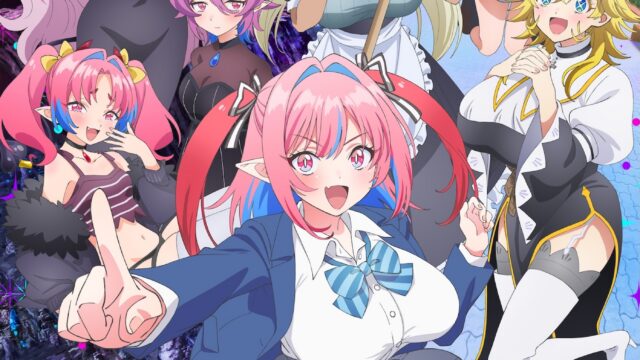
Consisting of twelve episodes, the first season of The Dark History of the Reincarnated Villainess follows the usual schtick as other similar anime. The series centers on Konoha Satou, an office worker who spent her childhood writing a fantasy novel called “The Dark History” with her once-kooky imagination. When she gets killed by a moving truck, Konoha finds herself reincarnated into the realm she created years ago, but not as the protagonist she created, Konoha Magnolia (Luci Christian). Instead, she’s reborn as the protagonist’s evil young sister, Iana, who initially planned to use the Dark History to kill her sister. To make matters worse, the original plot puts Iana on a path towards her demise at the hands of her butler, Sol Nemophila (Blake McNamara), while Konoha gains magical abilities. Iana must now remember the plot details she devised years ago to avoid her destined fate and gain a peaceful life. However, her quest ended up changing the story’s plot line itself, with Konoha being left powerless and Sol developing feelings for Iana. Things get even more complicated for Iana when her story eventually begins to correct itself despite her efforts.
To put it briefly, if you’ve seen the other isekai anime involving a reincarnated villainess seeking redemption, then you have seen The Dark History, a show that’s seemingly as bizarre as the protagonist’s creativity. Undoubtedly, it goes through similar motions as other anime with familiar concepts, particularly the isekai tropes and the attempts to avoid a story’s destined death flags. But what matters is that the show has the proper amount of entertainment value and creativity of its own to make it another watchable addition to the genre. Upon seeing this anime for the first time, I knew at first glance that I would be treated to another basic isekai anime that may not offer much to the formula. After watching the first few episodes, my doubts were confirmed when I saw Konoha transported into her own creation. However, what I didn’t expect was how silly and energetic this anime could get, not just in its light-hearted tone, but also in Iana herself.
The best way I would describe Iana is that she’s a hyperactive, silly, and occasionally mischievous young woman who utilizes every trope imaginable to create her own fantasy world. She’s also prone to freak out most of the time whenever she encounters a death flag or when the other characters grow suspicious of her. At first, her overly dynamic personality may come off as slightly annoying, especially as the season progresses. But in my eyes, she’s practically one of the reasons The Dark History is surprisingly enjoyable, even if the story doesn’t deliver anything new to the table. I don’t recall the previous works that Kelsey Cruz has been in, but I do hope she gets more work based on her vocal performance as Iana. It’s no easy feat to voice an extremely energetic protagonist without making them too obnoxious for viewers to execute them immediately, but Cruz managed to find that sweet spot to make her untamed nature work for me. She conveyed Iana’s outlandish imagination effectively, injecting energetic humor and silliness into the show’s familiar narrative beats. I would even say she’s easily one of the anime’s highlights that make this surreal creation worth looking at.
As for the plot itself, The Dark History is what you expect from an isekai villainess anime, ranging from its world-building to its basic love triangle. In the latter’s case, Iana finds herself in hot water when her butler, Sol, who was supposed to assassinate her in the original story, gradually falls in love with her. The love triangle is then formed by the arrival of Yomi Blacksarena, Iana’s villainous partner, who tries to convert her back to her evil self, sparking a rivalry between him and Sol. Fortunately, the only element that made this formulaic structure watchable was its tone. Series director Hiroaki Sakurai sought to replicate the manga’s visual style and light-hearted tone, with the latter depicting a fast-paced, chaotic, and offbeat reflection of Iana’s panicked efforts to avoid being killed. Most of the time, this direction elicits plenty of chuckles because of how outlandish Iana’s reactions can be, often resulting in visual slapstick and a surprisingly endearing self-awareness regarding its tropes. On the other hand, it also poses the risk of being overkill for some viewers as the season progresses, though not enough to turn them off completely. But even with that, Sakurai’s direction made its tone amusing enough to make Iana’s torment somewhat fun to experience.
The animation from Studio Deen respectfully conveys the vibrant art style and visual bizarreness of the source material. Given that the studio also animated the first two seasons of KonoSuba, it’s no surprise that the presentation featured some outlandish, colorful energy from one of its characters. Heck, if you watch the two shows back-to-back, you might end up mistaking The Dark History as an unofficial spin-off of the popular isekai harem anime. Though, as far as animation goes for the genre, the presentation in The Dark History is about as straightforward as one could get in terms of fantasy action and innovation. However, it’s mostly saved by its approach to visual comedy, notably the characters’ Chibi appearances and facial expressions.
Regarding the endless sea of isekai anime, I would’ve easily seen The Dark History of the Reincarnated Villainess as another throwaway addition to the derivative genre. While that may be the case regarding its formulaic narrative, I was honestly surprised by how enjoyable it was. While familiar by design, it offered a respectable amount of bizarreness and self-awareness, capturing Iana’s offbeat imagination and striving to achieve a peaceful life while protecting her powerless sister. Its tone, while quirky, may become a bit tiring towards the end of the season, which hints at Iana’s biggest confrontation yet. Fortunately, it’s able to retain the amusement and peculiar flair of Iana’s attempts to rewrite her dark history to make it another watchable addition to the expansive genre. Kelsey Cruz successfully captured Iana’s eccentric personality through her vocal performance, and the animation by Studio Deen suitably conveyed the dynamic art style and visual humor of the source material. It may not overshadow some of the better isekai worlds on the genre’s list, but it is surely one story I wouldn’t mind returning to for its second season.