English Dub Season Review: One Punch Man Season One
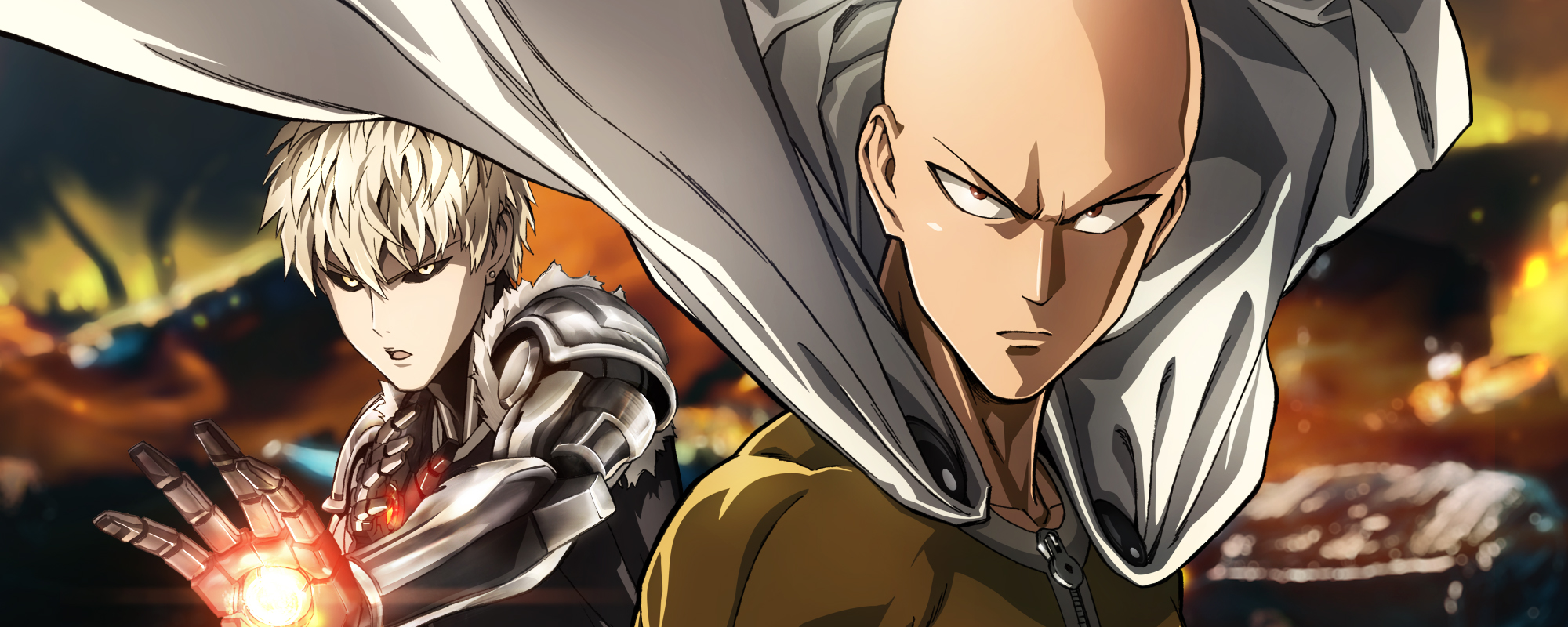
Based on the Japanese manga series created by One and first released as a webcomic in 2009, this story follows Saitama, an outwardly unimpressive but overwhelmingly powerful hero who trained so intensely that he lost all his hair and can now defeat any opponent with a single punch, an ability that leaves him bored and frustrated by the lack of real challenge in his life. Determined to recapture the thrill of battle, Saitama seeks stronger foes while crossing paths with new allies, including the 19-year-old cyborg Genos, who becomes his self-declared disciple after witnessing Saitama’s strength. Shocked to discover how unrecognized he is despite his power, Saitama joins Genos in registering with the Hero Association, setting him on a new journey filled with strange villains, unexpected friendships, and the faint hope of finally finding a worthy fight.
On the technical side, Season One was produced by Madhouse and directed by Shingo Natsume (Space Dandy) and written by Tomohiro Suzuki, with character designs by Chikashi Kubota, who also served as chief animation director. The music was composed by Makoto Miyazaki, with art design by Shigemi Ikeda and Yukiko Maruyama. Ken Hashimoto served as the color key artist, Akane Fushihara served as the director of photography, Kashiko Kimura served as editor, and Shoji Hata served as sound designer. The opening theme song is “The Hero!! Set Fire to the Furious Fist”, performed by JAM Project, while the ending theme song is “I’ll Find It Before the Stars for You”, performed by Hiroko Moriguchi.
At its core, One Punch Man delivers a tongue-in-cheek spin on the superhero formula, presenting a world overflowing with monsters, caped do-gooders, and an apathetic protagonist who can obliterate any threat with a single strike. At its center is Saitama, a man who became so overwhelmingly strong that the thrill of battle evaporated from his life, leaving him to wander through increasingly chaotic events with deadpan disinterest. His encounter with Genos, a vengeful cyborg seeking both strength and mentorship, opens the door to a broader narrative involving the Hero Association, elaborate ranking systems, and an ever-expanding roster of eccentric allies and enemies. Beneath the absurd gags and anticlimactic finishes lies a clever parody that constantly acknowledges the clichés of battle shounen storytelling while reveling in their excesses.
Despite its deceptively simple premise, the series builds momentum as it leans into its satire of hero culture, social perception, and the superficiality of fame. Saitama’s unmatched strength becomes less a punchline and more a lens through which the show ridicules the melodrama and self-importance common to superhero fiction. Characters like Genos, Mumen Rider, and countless colorfully designed heroes embody familiar archetypes played straight, but their interactions with Saitama’s indifference add a layer of wit that keeps the comedy sharp. As new villains emerge, from monstrous sea tyrants to dimension-hopping conquerors, the show balances parody with genuine spectacle, all while poking fun at its own predictability and intentionally anticlimactic resolutions.
In terms of tone, One Punch Man thrives on the contrast between overblown theatrics and Saitama’s mundane concerns, constantly breaking the tension with abrupt humor or deliberate deflation. Exposition is delivered with wry self-awareness, often interrupted by Saitama’s impatience or boredom, turning even trope-heavy story beats into comedic set pieces. The series satirizes the relentless escalation common in action anime by allowing every buildup to crumble the instant Saitama steps in, yet it offsets this repetitiveness through a wide variety of heroes, villains, and subplots. Even as it acknowledges that its central joke can wear thin, the show embraces the absurdity so openly that its self-awareness becomes part of its charm rather than a limitation.
The production itself is where One Punch Man transcends its premise. Studio Madhouse approaches the material with absolute zeal, delivering fluid animation, dramatic camera work, exaggerated expressions, and a cinematic sense of scale that elevates both the satire and the action. Battles erupt with hyper-detailed choreography, explosive effects, and dynamic transitions that amplify the joke by presenting Saitama’s casual dominance with operatic spectacle. Character designs range from minimalist to intricately stylized, while the show’s soundtrack, which is anchored by a thunderous opening, memorable battle themes, and consistently strong voice performances, adds an extra layer of intensity and polish. Even when the humor pauses, the audiovisual craftsmanship ensures the experience never does.
Overall, One Punch Man thrives on the contradiction between its extravagant presentation and its deliberately hollow conflicts, using that tension to build a world that is as funny as it is oddly compelling. While its humor, repetition, or tonal choices may not resonate with every viewer, the series remains a sharp, energetic parody that understands exactly what it wants to be. Its vibrant cast, explosive action, and unapologetically absurd premise turn what could have been a one-note joke into a surprisingly engaging spectacle. Whether approached as a satire, an action showcase, or simply a hero story turned on its head, One Punch Man offers an entertaining ride that continues to resonate with audiences looking for something bold, clever, and unmistakably fun.