English Dub Season Review: Go For It, Nakamura-Kun!! Season One
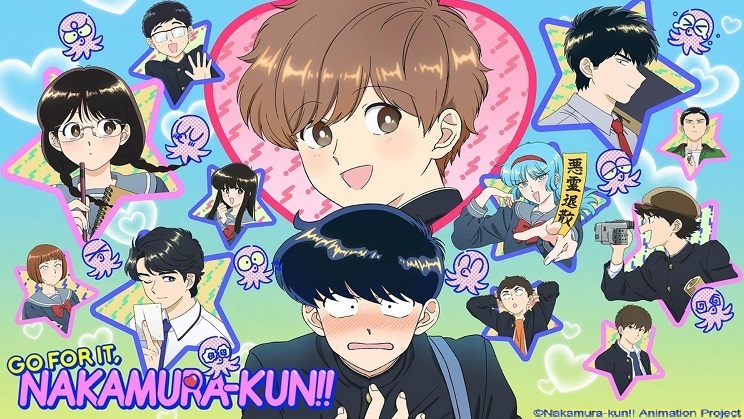
Based on the manga by Syundei, the story centers on Okuto Nakamura, a timid, closeted, socially awkward sixteen-year-old high school student who quietly harbors a crush on his cheerful male classmate Aiki Hirose. Struggling with intense shyness, Nakamura spends much of his time fantasizing about talking to Hirose, often placing himself in situations where they might interact—though these attempts usually spiral into awkward, comedic failures that only deepen his embarrassment. Despite a rough first impression and his own insecurities, Nakamura gradually begins to build confidence through shared school activities and repeated efforts to connect, slowly closing the distance between them. At its core, the series is a gentle, character-driven journey about overcoming social anxiety, navigating feelings, and forming genuine connections, ultimately leading to a heartfelt and mutual friendship between the two.
On the technical side, this anime adaptation was produced by Studio Drive and directed by Aoi Umeki, with Naoki Yoshibe serving as assistant director, Umeki and Yasuko Aoki writing series scripts, Umeki designing the characters, and Ayana Tsujita composing the music. The opening theme song is “Let’s Fall in Love Instantly” performed by Yasuyuki Okamura and Kento Nakajima, while each episode features a different ending theme song, which is a pre-existing Japanese song from the Shōwa and Heisei eras.
At its core, Go For It, Nakamura-kun!! is a heartfelt LGBTQ+ romantic comedy that makes Nakamura’s feelings for his classmate, Hirose, clear from the very beginning. Rather than centering on dramatic romance, the series is primarily a comedy built around Nakamura’s endless daydreams, exaggerated fantasies, and painfully awkward attempts to simply speak to the boy he likes. Much of the humor comes from how often he gets lost inside his own imagination, spending more time envisioning impossible scenarios than dealing with reality. You could make the argument that Nakamura’s romantic ambitions with Hirose aren’t leading anywhere, yet the story is really about the pining phase of a closeted gay teenager’s life, where every small interaction feels monumental. It captures the anxiety, excitement, and embarrassment of having an overwhelming crush while gradually exploring themes of self-acceptance, confidence, and growing comfortable with who you are.
What makes the series especially charming is its cast. Nakamura is an incredibly easy protagonist to root for, constantly bouncing between believing his life is over and celebrating the smallest victories within seconds, creating some genuinely hilarious moments. Although he’s awkward, insecure, and prone to overthinking, his gradual personal growth feels natural and rewarding. Hirose is equally compelling because he isn’t portrayed as an untouchable, idealized love interest. Instead, he’s simply a genuinely kind, thoughtful teenager whose compassion is shown through subtle actions rather than grand gestures, making it easy to understand why Nakamura falls for him. In many ways, Hirose has the warmth and sincerity of a modest Boy Scout, giving him an instantly likable presence. The supporting cast also adds plenty of personality and comedy, though some side stories occasionally distract from the central relationship and leave you wishing the show spent more time developing Hirose’s perspective.
The adaptation itself improves upon the manga in several meaningful ways by expanding scenes, rearranging events, and adding anime original material that gives both the characters and story more room to breathe. These additions strengthen the emotional progression and help the relationship develop at a steadier pace. At the same time, some manga scenes were softened or removed, with certain moments being censored despite the source material already being fairly tame, making a few emotional beats feel less impactful than they could have been. While the series remains intentionally lighthearted and comedy-driven, it balances its humor with relatable emotional moments that portray the awkwardness of adolescence surprisingly well. Even when the romance advances slowly or leaves certain questions unanswered, the coming-of-age aspects often become the true emotional focus.
In terms of production quality, the nostalgic art style beautifully recreates the retro aesthetic of late-80s and early-90s anime while still feeling polished and modern, supported by expressive animation and excellent visual comedy that elevate many of Nakamura’s exaggerated fantasies. The direction frequently uses creative camera work, lighting, and comedic timing to enhance both the emotional and humorous scenes. The voice cast delivers outstanding performances that perfectly capture the personalities of every character, while the soundtrack complements the atmosphere throughout. The opening is enjoyable, but it’s the constantly changing ending themes, filled with nostalgic city pop influences, that truly stand out and reinforce the show’s warm, retro identity. The staff poured a tremendous amount of care and passion into making this adaptation feel special.
Overall, Go For It, Nakamura-kun!! mostly works as a heartfelt coming-of-age comedy wrapped in the framework of a boys’ love story. Rather than focusing on sweeping romance, it tells an honest and relatable story about an awkward gay teenager learning to accept himself while navigating the uncertainty of first love. Its slower pacing and emphasis on comedy may not appeal to everyone, especially those looking for faster romantic progression, but its lovable cast, sincere emotional core, and excellent production values make it an easy series to root for. As of this writing, there’s still no word on a second season, but the anime leaves enough charm and potential to make it easy to hope Nakamura and Hirose’s journey will continue someday.