English Dub Season Review: The Villainess Is Adored by the Prince of the Neighbor Kingdom Season One
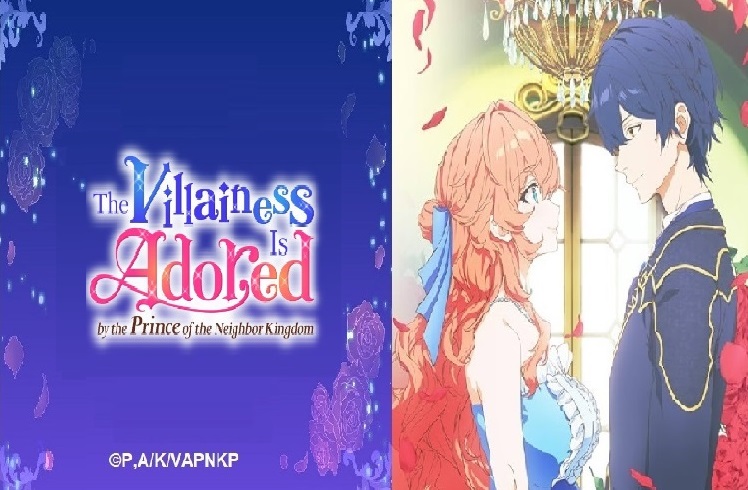
Based on the Japanese light novel series written by Puni-chan and illustrated by Akeno Naruse, the story follows a modern Japanese woman who dies and is reborn inside the otome game Lapis Lazuli Ring. Yet not as the heroine, but as Tiararose Lapis Clementille, the game’s designated villainess and fiancée of Prince Hartknights. On the eve of her scripted downfall, she regains memories of her past life and realizes the engagement is doomed, only for events to spiral when Hartknights publicly condemns and casts her aside in favor of the heroine, Akari. Just as exile looms, the prince of a neighboring kingdom intervenes…
On the technical side, this anime adaptation was produced by Studio Deen and directed by Takayuki Hamana, with series composition by Yoshimi Narita, characters designed by Majiro, and music composed by Satoshi Hono and Nakano Karin. The opening theme song is “Love’s Fanfare”, while the ending theme song is “The Magical Sound”, both performed by Ayahi Takagaki and Yu Shirota.
In a nutshell, this series leans heavily into wish-fulfillment, presenting itself as a romance where Tiararose is constantly adored rather than meaningfully challenged. Its core concept of a woman dying and awakening inside a fantasy/adventure dating sim video game is slightly reminiscent of something similar I covered years ago, but here it is handled in a far more surface-level way. What begins as a familiar “villainess avoiding her scripted downfall” premise quickly shifts into a narrative where she is endlessly praised, protected, and pursued with little resistance, even while baking cookies here and there. The story avoids committing to real stakes, brushing aside red flags and reframing questionable behavior as romantic, while resolving conflicts with minimal effort. Any intrigue tied to the game-like structure or alternate character roles fades early, leaving behind a predictable and overly indulgent experience that prioritizes comfort over substance.
The romance between Tiararose and Aquastead Marineforest suffers from rushed execution and a lack of believable chemistry. Their relationship escalates almost immediately, skipping over the development needed to make their connection feel genuine. Key emotional moments feel unearned, and instead of building tension naturally, the story relies on forced drama, sudden doubts, love triangles, and contrived misunderstandings to keep things moving. These conflicts are introduced and resolved so quickly that they lose any real impact, making the romance feel hollow and repetitive.
Character writing is easily the weakest aspect of the series. Despite being labeled a villainess, Tiararose lacks any traits that justify the title, instead coming across as passive and overly dependent on others. She rarely takes initiative, often feeling like a bystander in her own story while others step in to resolve conflicts. Akari at least brings some unpredictability, but her shifting behavior feels inconsistent rather than nuanced. The supporting cast doesn’t fare much better, with thin characterization and motivations that exist purely to serve the plot. This lack of cohesion is especially noticeable in the fairy world, which highlights how little thought went into internal consistency: characters like Claire, a male character whose name is traditionally feminine-sounding, holds the title of “Sky Fairy King,” while Pearl is clearly presented as female yet still holds the title of “Sea Fairy King” instead of “Queen.” These choices come across as random or poorly considered, since the series never explains why royal gendered titles are ignored or why naming conventions clash so heavily with character presentation. Combined with other oddly structured royal titles and terminology, it makes the setting feel less like a cohesive fantasy world and more like a collection of mismatched ideas that were never fully refined.
From a production standpoint, the series delivers a consistently uneven presentation that never quite stabilizes into something fully polished. The character designs, especially Tiararose, are undeniably attractive and fit well within a soft, shoujo-inspired aesthetic, but that visual appeal isn’t matched by the animation quality. Movement often feels stiff and under-animated, and key scenes regularly fail to carry the emotional or visual weight they aim for, resulting in moments that look serviceable rather than impactful. The music and sound design do provide some support, reinforcing the romantic tone and adding a light layer of charm, but they rarely stand out on their own or elevate the material beyond its limitations. Taken together, the production elements do just enough to keep the series afloat visually and aurally, but they never meaningfully compensate for the story’s weaknesses or push the experience into anything memorable.
Overall, this was a series that ultimately fell short of its potential, settling into a space of bland, uninspired mediocrity. While it may appeal to viewers looking for a simple, low-effort romance, its weak storytelling, underdeveloped characters, and heavy reliance on clichés make it difficult to fully recommend. The narrative consistently prioritizes convenience over substance, relying on predictable developments and forced emotional beats rather than earning its progression, and even its more charming or visually appealing moments are not enough to offset how shallow and repetitive the experience becomes. The inconsistent worldbuilding, especially the confusing naming conventions and mismatched royal titles, further weakens immersion, making the setting feel less like a cohesive fantasy world and more like a loosely assembled framework for romance scenarios that never fully develop into anything meaningful. As I’m typing this, there’s currently no word on a Season 2, but they’ll be lucky if that ever becomes a thing at all.