English Dub Season Review: Roll Over and Die Season One
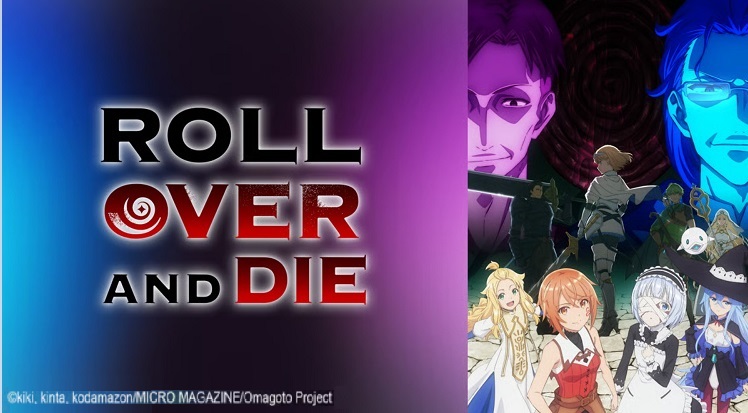
Based on the Japanese light novel series written by Kiki and illustrated by Kinta, the story follows Flum Apricot, a heroine born with the peculiar “Reversal” Affinity, leaving her with zero stats in every area. Prophesied by their God known as “Origin” to join the Hero’s party and defeat the Demon Lord, Flum’s journey quickly turns grim when the party’s sage, Jean Inteige, betrays her, selling her into slavery and casting her to ghouls for sport. Armed only with a cursed sword that threatens her life, Flum discovers the true power of her Reversal Affinity: the ability to turn her weaknesses into strengths, forcing her to confront death, defy betrayal, and rise despite having no conventional talent or magic to rely on.
On the technical side, this anime adaptation was produced by A.C.G.T and directed by Nobuharu Kamanaka, with Mariko Kunisawa handling series composition, Miki Matsumoto, Fumio Matsumoto, Takashi Fukuyo, and Takafumi Furusawa designing the characters, and Ryo Takahashi composing the music. The opening theme song is “Liberator”, performed by PassCode, and the ending theme song is “I Need”, performed by Yuki Tanaka.
At its core, Roll Over and Die follows a familiar setup within Anime’s fantasy/adventure genre: a discarded hero trying to rediscover/reclaim their sense of purpose, but it sets itself apart through its harsher tone and character motivations. Flum Apricot’s journey begins after being cast aside and betrayed, forcing her into a position where survival becomes her only goal. Along the way, her bond with Milkit introduces moments of warmth and humanity that contrast the surrounding brutality. The idea of Flum reclaiming her sense of self by protecting someone even more vulnerable is compelling, and there are stretches where the story feels genuinely engaging. However, the execution wavers, with plotlines that are introduced but not properly explored, and a narrative that often feels like it’s shifting direction without fully committing to any one path.
What makes this series further stand out is how easily and aggressively it leans into suffering and cruelty, presenting a world that feels deliberately oppressive and, at times, stomach-turning. It excels at crafting villains that are unrepentant monsters figuratively and (and later) literally, the kind that evoke real emotional disgust rather than simple dislike. Flum starts with hope and sincerity, but repeated trauma strips that away, reshaping her into someone far more pragmatic and morally detached. Her evolution into a character who can decide that some people simply aren’t worth saving adds a sharp, uncomfortable edge to the story. Rather than a heroic rise, her arc feels like a slow erosion of ideals, turning her into someone who is no longer chasing justice but merely trying to endure.
One of the biggest issues lies in the show’s inconsistent tone. It tries to balance dark fantasy, horror elements, and an emotionally charged relationship between Flum and Milkit, but these aspects rarely blend smoothly. Instead, the series swings between extremes, grim violence one moment, then softer, almost slice-of-life or romantic scenes the next, creating a sense of tonal whiplash. The central relationship, while clearly important, often feels underdeveloped, relying heavily on shared trauma rather than meaningful progression. Because of this, both the horror and the emotional core lose impact, clashing instead of reinforcing each other and leaving the overall experience feeling disjointed.
Visually, the anime is serviceable but far from impressive. The art style captures the darker tone well enough, but the animation itself struggles, particularly during action scenes where movement lacks fluidity, and fights feel lifeless. Direction choices can come across as uninspired, with noticeable shortcuts that weaken immersion, especially in later episodes. The music fares slightly better, occasionally helping to build atmosphere or tension, though it rarely stands out memorably. Even the opening sequence suggests a more intense and cohesive experience than what the series ultimately delivers, creating a disconnect between expectation and reality.
Overall, Roll Over and Die is a mix of compelling ideas and inconsistent execution. Flum Apricot’s descent from hopeful hero to hardened survivor is one of its strongest elements, and the darker aspects of the world show real promise. However, uneven pacing, tonal inconsistency, and a reliance on rushed exposition particularly toward the end hold it back from reaching its full potential. While the quality declines in the latter half, it remains watchable and occasionally intriguing, largely because of the stronger foundation it starts with. While there’s currently no word of a season 2, I’d still like to see where it goes somewhere down the line if it does continue.