
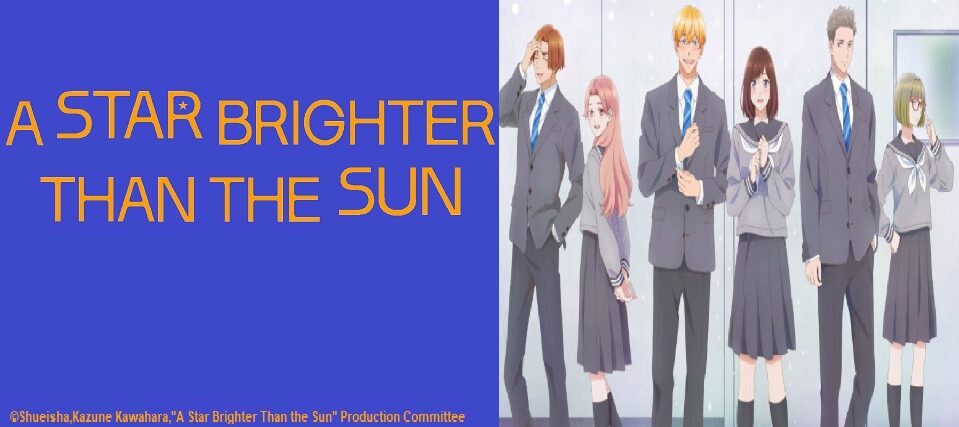
English Dub Season Review: A Star Brighter Than the Sun Season One
Based on the Japanese manga series written and illustrated by Kazune Kawahara (Creator of My Love Story!!), The story follows Sae Iwata, a slightly tougher-than-average high school girl. Her first love, Koki Kamishiro, was once a delicate and fragile boy, but now, in their third year of junior high, he has grown into a cool and popular young man. Although they have drifted apart, her feelings remain unchanged. When they are paired up to help prepare for the sports festival, Sae’s long-hidden first love begins to stir once more…
On the technical side, this Anime adaptation was produced by Studio Kai and directed by Sayaka Kobayashi, with series composition by Yasuhiro Nakanishi, characters designed by Jinfeng Zeng, and music composed by Natsumi Tabuchi and Miki Sakurai. The opening theme song is “Stellar Days”, performed by Motohiro Hata, while the ending theme song is “Latest Episode”, performed by Wanuka.
In a nutshell, A Star Brighter Than the Sun stands out as one of the gentlest and most sincere romance stories of the season, embracing classic shōjo sensibilities while grounding them in emotionally believable character work. At the heart of the story is Sae Iwata, whose insecurities about her height, strength, and perceived lack of femininity are treated with empathy and restraint rather than exaggerated drama. Her internal struggles feel painfully authentic, especially for anyone who has dealt with body image issues during adolescence, and they form the emotional backbone of the series. This focus on vulnerability gives the story a quiet honesty that elevates what could have been a very standard premise.
The romance between Sae and her childhood friend Koki Kamishiro is deliberately slow-burning, built on years of shared history rather than sudden sparks. Their dynamic is defined by mutual admiration and misunderstanding: Sae believes she is unworthy of standing beside Koki, while Koki still sees himself as the weak boy Sae once protected. These parallel insecurities fuel much of the tension, sometimes stretching believability, but the series offsets this by allowing steady progress and honest conversations. Problems are rarely left to fester unnecessarily, and the emphasis on communication keeps the story from feeling artificially stalled, even when misunderstandings linger longer than they should.
Supporting characters play a significant role in shaping the narrative’s warmth. Sae’s friends are refreshingly supportive, encouraging her confidence and helping her experience a more “normal” high school life without undermining her individuality. On the male side, figures like Ayukawa add contrast by presenting alternative dynamics that highlight both the strengths and weaknesses of Sae and Koki’s bond. While the story occasionally flirts with familiar love-triangle tension, it never allows melodrama to overwhelm its central theme of personal growth, keeping the focus firmly on emotional development rather than rivalry.
From a production standpoint, the anime is visually appealing in a way that complements its soft, introspective tone. The character designs lean heavily into traditional shōjo aesthetics, large expressive eyes and delicate facial features which suit the emotional openness of the story. Studio Kai’s direction favors subtle transitions and gentle visual flourishes over flashy animation, creating a smooth, comforting viewing experience. The music supports this atmosphere well: the background score is unobtrusive yet effective, while the opening and ending themes are pleasant and emotionally fitting, even if they don’t leave a lasting impression on their own.
Overall, A Star Brighter Than the Sun is a heartfelt coming-of-age romance that succeeds through sincerity rather than innovation. It doesn’t reinvent the shōjo formula, but it executes it with care, emotional intelligence, and a strong focus on insecurity, growth, and mutual understanding. While its pacing and familiar tropes may not work for everyone, its warmth, relatability, and character-driven storytelling make it a rewarding experience for romance fans especially those who appreciate soft, introspective love stories that value emotional honesty over dramatic excess. And with the recent announcement of Season 2, I’m left wondering what other stories they could tell after that particular finale?













"There are also other characters that come and go (also owned by the Warner Bros. Discovery conglomerate media company)."
Huh. Is that just referring to other characters from the show itself, or is this implying that the new season is going to have cameos from other WBD IPs