Season Review: X-Men 97 Season Two
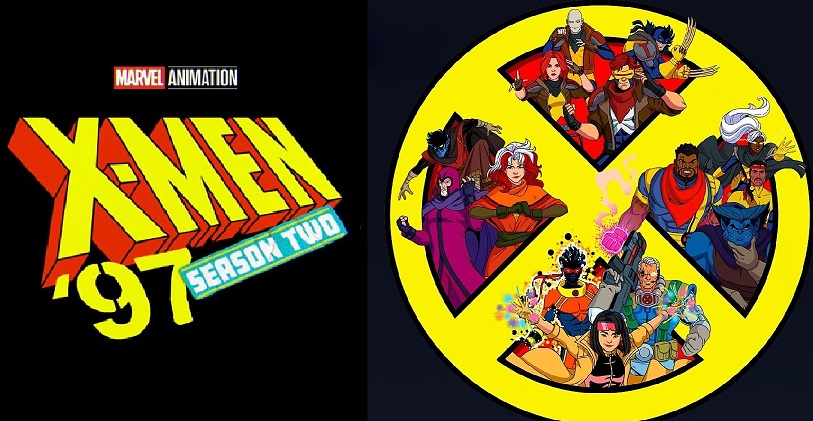
After a highly acclaimed first season, X-Men ’97 returns with an ambitious structure that splits the X-Men across multiple timelines, all converging on one looming threat: Apocalypse, an immortal mutant from Ancient Egypt with a “Survival of the fittest” philosophy. The premiere episodes immediately escalate the scale, scattering the team from a distant future to ancient Egypt and the 1990s, where each faction is forced into distinct but interconnected struggles. Despite the narrative complexity, everything is clearly aligned toward the same escalating conflict, with Apocalypse reintroduced as a more intimidating, layered, and almost mythic force than before.
On the Technical Side. much of the same crew from Season one is carried over, with Animation provided by Studio Mir (Harley Quinn, Lookism, Legend of Korra, My Adventures with Superman and the Netflix Devil May Cry series) and Tiger Animation (Castlevania Series Seasons, Black Dynamite, X-Men: Evolution and multiple DC Animated projects.) with music composed by the Newton Brothers along with Disney’s efforts to purchase the rights to use the iconic 90’s theme song by Ron Wasserman (whose credits are mostly noteworthy for his past works within Saban and Power Rangers).
X-Men ’97 Season 2 gets off to an impressive start, immediately embracing the larger-than-life spectacle that makes the franchise so entertaining. The story feels bigger, the stakes are higher, and the expanded cast makes the season feel like a genuine X-Men event. There are plenty of surprises, comic-book references, and fan-service moments that capture the energy of the source material and make the opening stretch especially exciting.
The character work is strongest when the season allows its emotional material to breathe. Gambit’s death hangs over much of the season, with Rogue struggling to process her grief and the loss of the man she loved. Her lingering longing for him not only carries much of the season’s heartfelt material but also gives the story some of its strongest emotional weight. At the same time, Nightcrawler, Bishop, Polaris, Jubilee, and Colossus all get opportunities to shine, demonstrating the strength of the X-Men’s enormous roster. The season is at its best when it gives these characters room to exist beyond the larger spectacle.
Unfortunately, the season’s biggest weakness is its pacing, and the complicated circumstances surrounding Beau DeMayo’s departure may have contributed to some of its unevenness. DeMayo had already written Season 2 before it was even animated, but he was fired before Season 1 premiered. He was subsequently replaced as showrunner by Marvel’s “What If…?” writer Matthew Chauncey, who oversaw rewrites and guided Season 2 through the animation process. The circumstances surrounding DeMayo’s departure have also been the subject of conflicting reports, with some accounts portraying his exit as a firing, while others offer different explanations for what happened behind the scenes. Regardless of which version is accurate, the fact that DeMayo’s scripts were being carried forward while other creatives handled the production and subsequent changes may help explain some of the season’s unevenness. Add in a nine-episode season with most episodes running under thirty minutes, and there isn’t enough room for Apocalypse, Magneto, Rogue, Cable, X-Force, X-Factor, and the rest of the cast to receive the development they need.
The presentation, however, remains a major strength. The animation is sharp, colorful, and packed with impressive action, while the changing opening sequences cleverly reflect the character or storyline being emphasized. Morph is particularly entertaining, with his shapeshifting being used creatively during fights and providing plenty of fun Marvel fan service. The backgrounds are filled with Easter eggs and references, while the music and sound design give the action real weight and help elevate the more emotional scenes. The fifth episode, “Weapon X, Lies and DVDs,” is a good example of the show’s visual and stylistic strengths, even if it feels more like a fun homage to ’80s action/horror films than an essential chapter of the season. Whatever problems the writing may have, X-Men ’97 continues to look and sound fantastic.
Overall, X-Men ’97 Season 2 is an ambitious and entertaining follow-up that unfortunately struggles under the weight of everything it wants to accomplish. The animation, music, action, characters, and comic-book energy remain excellent, but the shortened runtime and uneven storytelling prevent many of its biggest moments from having the impact they deserve. Apocalypse in particular suffers from an underwhelming payoff after so much buildup, and the finale could have benefited enormously from one additional episode. Thankfully, the series has plenty of room to improve, with Season 3 and 4 both recently been announced and giving the franchise another opportunity to build on what worked. Hopefully, those seasons can slow down, let their stories breathe, and recapture the focused storytelling that made the first season so effective.