


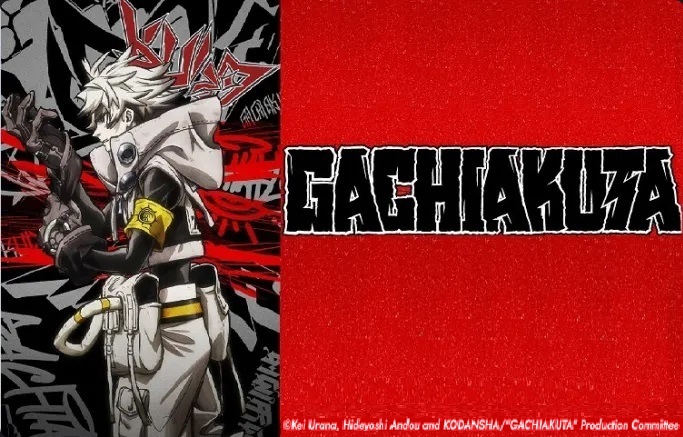
English Dub Season Review: Gachiakuta Season One
“Change this Shit-heap of a world, make it something worth living in!”
Based on the Japanese manga series written and illustrated by Kei Urana, Gachiakuta follows Rudo, a bullied outcast living in the slums of a floating city where the wealthy discard trash and people without a second thought. When he’s falsely accused of murder and thrown into the Pit, a toxic wasteland filled with monstrous creatures born from discarded junk, Rudo is forced to fight for survival in a world designed to erase him. Saved by the rogue Cleaners and awakened to a strange new power through weapons known as Vital Instruments, Rudo turns his struggle into a mission of escape and vengeance, setting his sights on the corrupt society that cast him into hell in the first place.
On the technical side, this anime adaptation was produced by Studio Bones and directed by Fumihiko Suganuma, with Hiroshi Seko handling series composition and episode screenplays, Satoshi Ishino as chief animation director and character designer, and Taku Iwasaki as music composer. For the first course, the opening theme song is “Hugs”, performed by Paledusk, while the ending theme song is “Tomoshibi”, performed by Dustcell. For the second cour, the opening theme song is “Let’s Just Crash”, performed by Mori Calliope, while the ending theme song is “Ban”, performed by Karanoah.
Gachiakuta immediately stands out with its grimy, striking aesthetic and sharply divided world, where the privileged float above while the discarded rot below. Produced by Bones Film and adapted from Kei Urana’s manga, the series blends dark shōnen action with biting social commentary, exploring class disparity, environmental decay, and psychological trauma. Rudo’s journey from criminalized scavenger to empowered Cleaner grounds the story in injustice and survival, while the dense, imaginative worldbuilding and societies shaped by neglect reinforce the show’s central themes of disposability and societal rot. By turning the Pit and the discarded Sphere into a vivid metaphor for elitism and systemic cruelty, Gachiakuta combines emotional stakes, philosophical depth, and a mysterious, tension-filled backdrop that keeps viewers invested from the first episode.
One of Gachiakuta’s most compelling strengths is its power system, where Vital Tools/weapons are forged from emotional attachments that tie combat directly to character psychology, making fights feel personal rather than mechanical, while Rudo’s ability to repurpose trash into power reinforces the show’s thematic focus on worth and reuse. The worldbuilding excels when viewers can piece together the Ground as both a literal wasteland and a metaphor for societal neglect, yet this promise is undercut by uneven pacing across 24 episodes, where arcs often end just as they seem poised to matter, and exposition dominates over payoff. Despite flirting with bold themes like class oppression, waste culture, and inherited guilt, the series repeatedly retreats into familiar shōnen beats such as sudden mentors, factional conflicts, fake-out defeats, and drawn-out fights, leaving major revelations underdeveloped and narrative progression frustratingly thin, leaving you to wonder if any of it will have a proper payoff.
Character writing is also similarly uneven. While Rudo shines as an emotionally raw, revenge-driven protagonist whose grief and anger feel justified, and his bond with his father figure provides the series’ strongest emotional beats. However, much of the supporting cast leans on familiar shōnen archetypes, with a few exceptions like Enjin, Zanka, and Amo showing fleeting depth. The expanding roster and dialogue-heavy episodes dilute focus, while forced humor, tonal whiplash, and reliance on telling over showing weaken the emotional resonance when the action pauses. Even narrative revelations, such as Rudo’s important lineage, risk undermining the series’ thematic core, shifting the story from one about discarded people finding value to one where the protagonist was always exceptional.
Where this show truly shines the most is in its presentation. Studio Bones elevates Kei Urana’s dystopian world with fluid animation, dynamic fight choreography, and standout sakuga moments that make even familiar story beats feel impactful. Hideyoshi Andou’s graffiti-infused designs give the series a raw, punk identity, with thick outlines, bold colors, and grimy urban backdrops that make the world feel alive and oppressive. The soundtrack complements this aesthetic, blending industrial grit with emotional undertones, while stylistic shifts heighten dramatic and action sequences. Though audio mixing is occasionally uneven, the combined power of visuals and music carries the series, often compensating for narrative and pacing shortcomings.
Overall, Gachiakuta is a bold, visually striking series that thrives on raw energy, inventive worldbuilding, and a punk-infused aesthetic, even as it struggles with pacing and uneven character development. Its graffiti-covered environments, fluid animation, and dynamic fight choreography make it a feast for the eyes, while Rudo’s journey and the thematic focus on disposability and value give the story conceptual depth. But with a confirmed second season, along with an announced video game adaptation on the horizon, this new franchise is well-positioned to fully realize its ambitious ideas and deliver an even more thrilling, memorable experience.













"There are also other characters that come and go (also owned by the Warner Bros. Discovery conglomerate media company)."
Huh. Is that just referring to other characters from the show itself, or is this implying that the new season is going to have cameos from other WBD IPs