English Dub Series Review: Bungo Stray Dogs Wan!
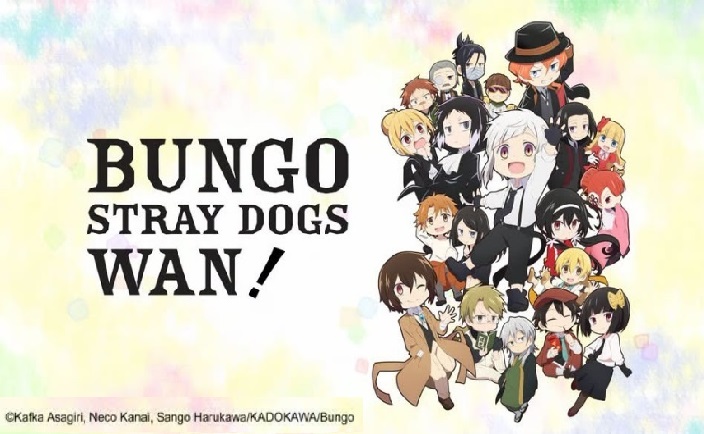
Based on the manga by Kafka Asagiri and Neco Kanai, Bungo Stray Dogs WAN! takes the characters from the main series and throws them into a much sillier world. Instead of the battles, supernatural mysteries, and darker drama of the original, this spin-off turns the Armed Detective Agency, Port Mafia, and their various allies into adorable chibi versions of themselves while putting them through ridiculous everyday situations. Atsushi, Dazai, Kunikida, Akutagawa, Chūya, Kyōka, and plenty of other familiar faces are given opportunities to bicker, prank each other, and cause trouble, with the two seasons gradually bringing even more characters into the chaos.
On the technical side, this anime adaptation parody series is produced by Bones and Nomad, with Toshihiro Kikuchi directing both seasons. The first season features series composition by Kazuyuki Fudeyasu, character designs by Hiromi Daimi, and music composed by Taku Iwasaki, while the second season retains the same core staff, with Tōko Machida handling series composition and Yūdai Hanaoka serving as assistant director. The first season’s ending theme is “Namae o Yobu yo,” performed by Yūto Uemura, while the second uses “Bokura,” performed by Kenshō Ono. Both installments also feature their own opening themes, appropriately matching the show’s playful tone.
The show itself faces an unusual challenge since it takes a series known for murder, tragedy, and supernatural warfare and turns it into a lighthearted comedy. Thankfully, it knows exactly what it wants to be and never tries to compete with the main series. The short episodes allow it to focus on character personalities, running gags, and ridiculous situations, making it an enjoyable companion rather than something meant to be taken seriously. It ultimately succeeds by showing what these characters might be like when Yokohama isn’t constantly on the verge of disaster.
One of the show’s biggest strengths is its cast. Characters who are normally separated by rivalries and alliances can suddenly be thrown together in completely mundane situations, and that contrast creates some of the best comedy. Dazai’s scheming, Kunikida’s frustration, Atsushi’s reactions, Akutagawa’s intensity, and Chūya’s temper all translate surprisingly well into this lighter setting. The larger lineup also creates more opportunities for unexpected character combinations, giving the comedy plenty of room to work with. Seeing these normally intimidating characters become completely ridiculous without losing their recognizable personalities is where much of the charm comes from.
The series does, however, have some notable flaws. Because the episodes are built around short comedic scenarios, some jokes work better than others, while recurring gags can occasionally become repetitive. The lack of an overarching story can also make the experience feel somewhat lightweight, especially for viewers expecting something with more substance. Some of the humor also relies heavily on already knowing the characters and their relationships from the main series. As a result, WAN! is much easier to appreciate as a bonus for existing fans than as a fun parody series of the franchise.
Visually, the series’ colorful chibi aesthetic fits its comedic style perfectly. The simplified designs keep each character recognizable, while exaggerated expressions and physical comedy give the animators plenty to work with. Bones and Nomad maintain a consistently polished presentation throughout, while Taku Iwasaki’s music and the returning voice cast help preserve the personality of the main series. Even when the material becomes completely ridiculous, the production gives the comedy enough energy and polish to keep it entertaining.
Overall, Bungo Stray Dogs WAN! is a fun and surprisingly charming spin-off that understands what makes its characters so enjoyable. Its short format, occasional repetition, and lack of substantial storytelling keep it from reaching the same heights as the main series, but that isn’t really what it’s trying to do. Across its two seasons, it provides an entertaining excuse to watch the cast cut loose and embrace their ridiculous side. If you’ve already invested in the mainline series, there’s plenty to enjoy here, and after all this chaos, sometimes even the stray dogs deserve a day off from saving Yokohama.