English Dub Season Review: Hell’s Paradise Season 2
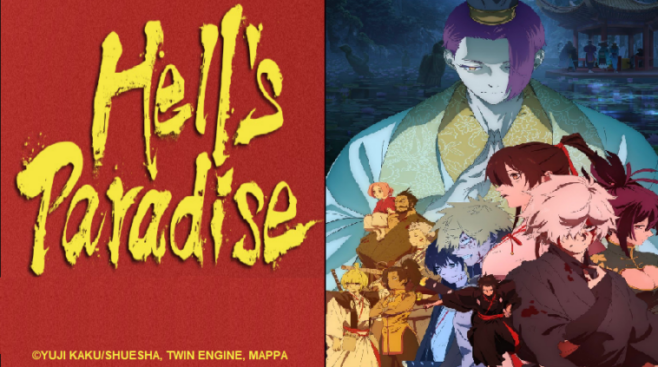
Long after the events of season one, where the Shogunate sent supervised death-row criminals to search for a mythical elixir on a mysterious island, they impatiently dispatch a second, more dangerous expedition led by the unhinged authoratarian Shugen, alongside elite Yamada Asaemon executioners and Iwagakure ninjas, all tasked with eliminating Gabimaru and seizing the island’s secrets; on the island, Gabimaru, Sagiri, and Yuzuriha are forced to endure escalating threats from the remaining Lord Tensen, whose Tao-based abilities significantly raise the stakes as the situation shifts from simple survival to uncovering the mysteries of the Elixir of Life and the island’s deeper structure, while Gabimaru struggles with amnesia that clouds his memories of his wife Yui and Sagiri continues to grow into a stronger leader under mounting pressure, pushing the conflict toward broader factional tensions and deeper revelations hidden within the island.
On the technical side, Hell’s Paradise Season 2 was produced by Twin Engine and MAPPA, with Kaori Makita directing, Akira Kindaichi handling series composition and scripts, Koji Hisaki designing the characters, and Yoshiaki Dewa composing the music, continuing the established creative team from Season 1, while the soundtrack also remains under Yoshiaki Dewa’s composition, maintaining continuity in the series’ overall sound design and tone. The opening theme song is “Kasuka na Hana” by Tatsuya Kitani feat. BABYMETAL, and the ending theme song is “PERSONAL” by Queen Bee (Ziyoou-vachi).
The second season of Hell’s Paradise immediately reestablishes its unforgiving tone, plunging back into the chaos of Shinsenkyou Island without hesitation. The narrative resumes with death row criminals, Asaemon executioners, and the enigmatic Tensen locked in escalating conflict, where survival is constantly undermined by shifting alliances and supernatural threats. New enemies are introduced early on, intensifying the danger and reinforcing the sense that no faction holds a clear advantage. Amid the relentless action, the story weaves in moments of introspection, allowing characters to briefly reflect even as the brutality of their circumstances continues to mount.
At the same time, the season broadens its scope through a more aggressive expedition dispatched by the Shogunate, led by Shugen, an executioner who is depicted as a calm yet unhinged authoritarian whose rigid ideology and ruthless decision-making amplify the tension within his own ranks as much as on the battlefield. Backed by elite Asaemon executioners and Iwagakure shinobi, this force is tasked not only with reclaiming control of the island but also with eliminating Gabimaru outright. Their arrival transforms the conflict into a layered power struggle between factions with clashing priorities. On the island, Gabimaru, Sagiri, and Yuzuriha are pushed into increasingly perilous encounters with the remaining Tensen, whose mastery of Tao significantly heightens the stakes. As events unfold, the narrative shifts from simple survival toward uncovering the island’s hidden structure, the truth behind its immortality, and the deeper significance of the Elixir of Life.
Character development remains a central pillar, though its execution varies. Gabimaru’s temporary amnesia introduces uncertainty into his motivations, particularly regarding his connection to Yui, while Sagiri gradually steps into a more defined leadership role under growing pressure. Other characters contribute to the expanding lore, with figures like Mei providing crucial insight into the island’s structure and the Tensen’s plans. However, the season’s pacing has drawn mixed reactions, as frequent shifts between battles and perspectives can dilute the emotional impact of key moments. Some conflicts feel fragmented, and certain characters receive less attention than expected, making the story feel, at times, like a transitional bridge rather than a fully self-contained arc.
From a production standpoint, the season delivers a strong visual presentation, with animation that captures both the fluidity and intensity of its combat. Fight sequences carry a tangible sense of weight and motion, while the island’s vibrant yet unsettling environments enhance the series’ distinct atmosphere. Character designs remain striking, and the contrast between beauty and horror is consistently emphasized through detailed effects and expressive animation. The musical elements complement this well, with a high-energy opening theme that injects momentum and a more subdued ending track that provides a reflective counterbalance, reinforcing the emotional undertones of the story.
Overall, this season builds upon the foundation of its predecessor by expanding the scale of its conflicts and deepening its underlying mysteries, even if it occasionally struggles with pacing and cohesion. While it may not always reach the same level of balance as the first installment, it succeeds in maintaining tension and setting the stage for what lies ahead. The narrative increasingly feels like it is approaching a major, escalating confrontation, positioning itself as a buildup toward a larger payoff that a future continuation could fully explore. If a third season is produced, it stands poised to dive headfirst into that looming conflict and deliver the resolution this arc is clearly building toward.