English Dub Season Review: One Punch Man Season 3 Part 1
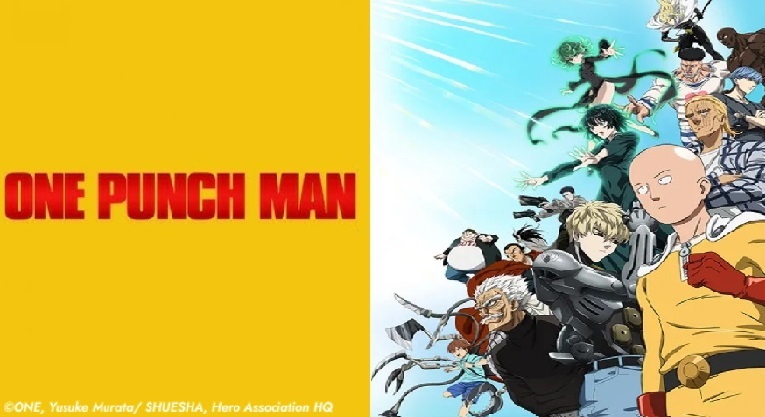
Picking up long after the events of season two, One Punch Man Season 3 part 1 starts with the S-class heroes being tasked to rescue the son of an important member of the Heroes Association. Meanwhile, Garou, on his journey of trying to be the strongest villain, gets recruited by the monsters, but quickly clashes with them after preventing the monsters from killing an innocent kid. The entirety of the season sees the S-Class heroes on a mission heading into the Monsters’ hideout while Saitama (Max Mittleman), Genos (Zach Aguilar), Fubuki (Laura Post), and Bang/Silverfang loaf around in Saitama’s house for most of the season before also heading into the Monsters’ hideout themselves near the end…
On the technical side, the third season of One-Punch Man is based on the original webcomic by One and its manga remake illustrated by Yusuke Murata. Officially announced in August 2022, the new season sees much of the main cast and staff from Season 2 returning. J.C.Staff once again handles production, with Shinpei Nagai stepping in as director in place of Chikara Sakurai. Sakura Murakami takes over as art director, replacing Shigemi Ikeda and Yukiko Maruyama, while Yuki Hirose assumes the role of director of photography, succeeding Yoshio Ōkouchi. Series composition is handled by Tomohiro Suzuki, character designs are led by Chikashi Kubota alongside Shinjiro Kuroda and Ryosuke Shirokawa, and Makoto Miyazaki returns as music composer. The opening theme, “Get No Satisfied!”, is performed by JAM Project featuring Babymetal, while the ending theme, “The Light, That’s There,” is performed by Makoto Furukawa.
When One-Punch Man Season 3 was first announced in 2022, anticipation was at a fever pitch, with fans expecting a return to the high-quality production that had defined the series’ earlier installments. However, the path to release was fraught with complications. The series struggled to secure a studio, ultimately returning to JC Staff in 2024. While the nominal two-year production window appeared sufficient, the studio was concurrently handling sixteen other projects, leaving less than a year for this high-profile anime to be handled effectively. By contrast, Madhouse, which produced season one, was managing only four projects at the time. This disparity in resources, compounded by rigid oversight from the production committee led by Bandai Namco, set the stage for a season hampered by structural and logistical challenges. Shinpei Nagai, whose background ranged from episodic direction and storyboarding to adult hentai, was tasked with leading the season despite lacking experience in large-scale production management, making the eventual shortcomings almost inevitable.
Narratively, the first part of Season 3 struggles to find its footing. Early episodes are weighed down by protracted debates among the S-Class heroes, excessive dialogue, and a near absence of Saitama, creating long stretches that feel slow and unfocused. While Garou’s story arc and certain S-Class spotlights offer depth and insight into character abilities and personalities, pivotal emotional beats often pass too quickly. At the same time, filler or quieter moments linger unnecessarily. The season’s pacing suffers as a result, and even when the narrative attempts to deliver exciting confrontations or character development, the impact is diluted. Though the second half of the course improves slightly, introducing more engaging encounters and better highlighting the S-Class heroes, the season remains inconsistent, with moments of genuine intrigue frequently buried beneath abrupt scene transitions and uneven storytelling.
Questionable censorship choices such as: altering Zombieman’s post-battle cigarette to a lollipop, toning down blood in key fights, the ridiculous and unecessary gender-swap of a certain character, and the blacking out of visual gore rightfully drew heavy criticism; while censorship is not uncommon in anime (as seen historically with JoJo’s Bizarre Adventure and older 4Kids-era edits of One Piece), these changes felt especially jarring given the series’ established tone. The online backlash, at times, consequently resulted from comical memes nicknaming the season “One Frame Man” to rabid harassment and led legendary animator Takashi Hashimoto to plead for recognition of the staff’s effort, and caused Shinpei Nagai to deactivate his social media accounts. These issues highlight that much of the criticism stems from management and production constraints rather than the talent of the animators themselves.
In terms of sounds & visuals, Season 3’s animation and music are highly inconsistent. Many sequences are static or minimally animated, with characters dragged across the screen in PNG form, giving parts of the season a slideshow-like quality. Combat, the series’s hallmark, often lacks fluidity or impact, though mid-season highlights such as the battles involving Zombieman and the Child Emperor demonstrate what the show could have achieved under proper conditions. Music by Makoto Miyazaki provides occasional moments of intensity and continuity through familiar motifs, yet it cannot fully compensate for uneven visuals or the underdeveloped execution of dramatic scenes. The combination of rushed production, censorship, and inconsistent animation has left a visible gap between the show’s potential and its realized form, frustrating longtime fans and critics alike.
Overall, One-Punch Man Season 3 Part 1 remains a polarizing chapter in the franchise. While sporadic character moments and brief flashes of high-quality animation remind viewers why the series earned global acclaim, these are overshadowed by erratic pacing, uneven visuals, and questionable creative decisions. Saitama remains underutilized, and controversial edits, combined with poor production management, have amplified fan frustration. Yet with the recently announced Part 2 slated for 2027, there is cautious optimism that lessons will be learned, production resources properly allocated, and the next installment can finally deliver the dynamic storytelling and animation excellence that fans have long been waiting for.