English Dub Season Review: This World Can’t Tear Me Down
One of the perks of this job is getting exposed to animated shows from all over the world that I probably wouldn’t have noticed otherwise. I don’t doubt there are dozens of works that I’d probably quite enjoy or feel enriched for seeing, but by that measure, it’s also very easy for things to get lost in the shuffle as more and more content gets released on dozens of streaming services. I bring this up because “This World Can’t Tear Me Down” is definitely not something I would seek out or come across in my usual circles, but I’m quite glad I did. Created by Michele “Zerocalare” Rech, this show comes from Italy, a country that is not exactly the first one thinks of in terms of animation, and is often overlooked in terms of current world politics. However, like many memorable animated shows and movies, it gives us a glimpse at a culture from the perspective of someone living there and seeing major cultural shifts, some of which have concerning connections to things happening here in the United States.
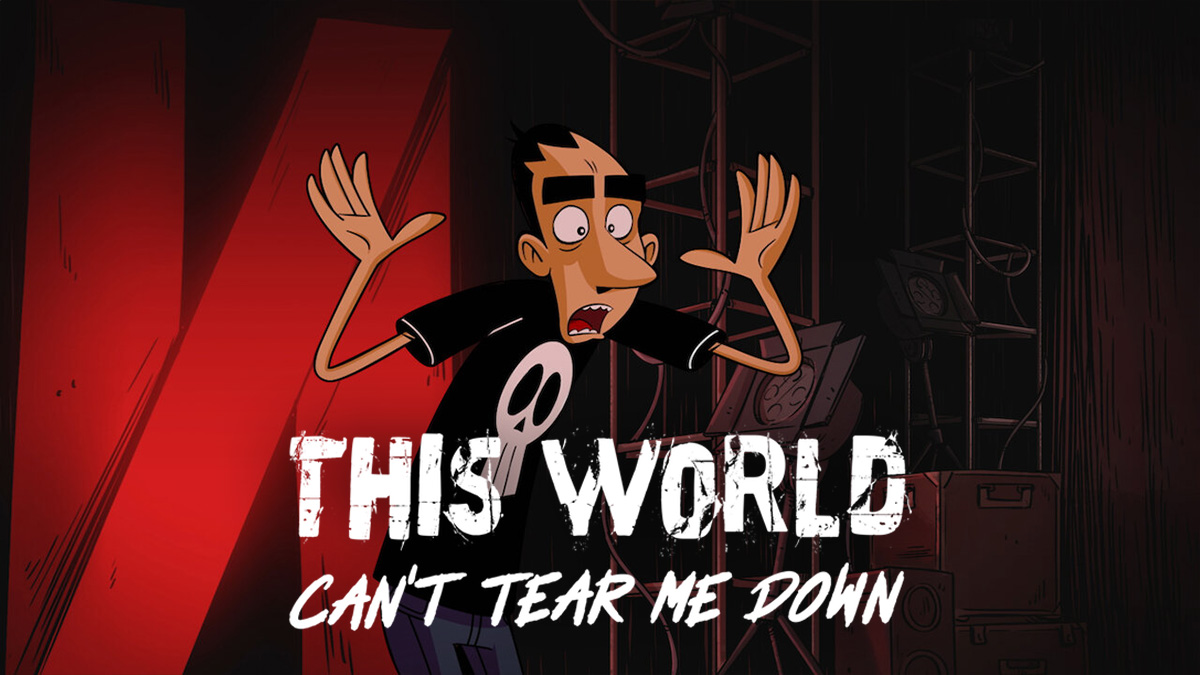
“Tear Me Down” is Zerocalare’s second animated series after “Tear Along the Dotted Line”, which follows animated versions of himself and what seems to be people he knows from his hometown as he reflects on his time with a friend and former crush. Because of possibly a difference in format, it’s hard to say if this new series is just a second season of “Dotted Line”, but it does seem to basically be a follow up. Either way, it’s easy enough to jump into “Tear Me Down” without watching the previous one, which helps because understanding the characters and dynamics is important to connect with the major issue of the series: The Rise of Facism in Italy. Yeah, didn’t think it would get that heavy, did ya? Well, it actually makes a bit more sense than you might think, considering the state of the world the past few years as well as Italy’s own history with that ideology, but aside from a few global reports, I couldn’t exactly blame you for not noticing much about what’s happening there.
This issue is scaled down to a major protest turned street fight that’s used as the framing device of the story. The protest in question focuses on a group of a couple dozen refugees and the growing anti-immigrant sentiment in Rome, which Zero, Rech’s animated self, observes as it impacts those around him. Some friends are unphased, others find their goals obstructed and forced to compromise their beliefs, some others sit on the sidelines, and even others still find themselves swept up into things. A good portion of the story focuses on Zero and his estranged friendship with Cesare, an old friend just now coming back from rehab who’s been inducted into the local Nazi party, putting him at odds with Zero, an adamant anti-facist, even as Zero tries to understand and pull him back. It’s through Cesare that the show focuses on how easily vulnerable people can be lured into these groups even when they’re clearly being used for more sinister ends, something that is sadly on the rise in other western countries as well.
If I had to point to any issues that other international audiences might have with jumping into this or “Dotted Line”, it’s probably with the dubbing, which may actually be a problem with how the language is spoken in comparison to English or even English Dubs of other international shows. The way Zero and other characters talk is very rapid fire, and while you can pick up what they’re saying for the most part, it’s still something you have to get used to, even for the scant six episodes there are. He also tends to ramble and go on tangents from time to time, sometimes to fill in some context about a new character or situation, sometimes just to go on a rant. Likewise, the animation is not most elegant, though that ends up balancing out as the story unfolds. I honestly was expecting some sort of Family Guy or Rick and Morty knock-off that are so prevalent in the medium, but thankfully this is anything but.
Some may take issue with the focus on politics in this series and the vehemently anti-facist position the show takes. To that I must remind you: All art is political. Some are more blatant than others, and the execution can often vary. I’ve seen plenty of stories with politics that I agree with but ended up not caring for the story told, along with other extreme. But I bring this up because these issues, especially the continuing rise of facism and totalitarianism, are or are soon becoming realities for an increasing amount of people in the world. I hopefully don’t need to point to the increasing radicalizing of the right wing here in the states to make clear that this is something happening very close to us, with far reaching consequences if it’s allowed to continue. I don’t expect everyone to get the big picture just from watching this show, or even a fully accurate picture of what’s going in Italy specifically, but if you want to get some more exposure to art from a place that doesn’t make as much animation as places like the US, Japan, or South Korea, I recommend it.